
TABLE OF CONTENTS
- 1 What Core Web Vitals Mean in 2026
- 2 Why Speed Is Now Part of the Design Process
- 3 The Core Discovery Shift: Experience Comes First
- 4 Speed Impacts More Than Rankings
- 5 Designing for AI-Driven Search
- 6 Where Websites Commonly Go Wrong
- 7 What Effective Website Speed Optimization Looks Like
- 8 Frequently Asked Questions
- 9 The Bottom Line
In 2026, website speed optimization is no longer a technical afterthought. It is a competitive advantage.
When someone lands on your website, they are not thinking about load times or rendering metrics. They are deciding whether your business comes across as professional, trustworthy, and easy to work with. If the page stalls, jumps around, or takes too long to respond, that first impression is already damaged.
That is why website speed optimization has become central to modern web design. It affects rankings, conversions, paid ads, and overall credibility. And it is no longer something you fix after launch. It has to be built in from the start.
What Core Web Vitals Mean in 2026
Core Web Vitals are Google’s way of measuring how a site feels to real users.
The names may sound technical, but the concepts are straightforward:
- How quickly does the main content appear?
- How fast does the site respond when someone clicks?
- Does the layout stay stable while the page loads?
When planning your SEO for 2026, remember, these experience signals still matter. Google continues to evaluate whether users are getting a smooth, reliable experience. A website can have a beautiful design, but if it loads slowly or shifts unexpectedly, it will struggle to compete.
Design and performance are no longer separate conversations. They are the same conversation.
Tools like Page Speed Insights break down the metrics that make up your website’s Core Web Vitals.

Why Speed Is Now Part of the Design Process
There was a time when speed fixes happened after a site went live. A developer would run a report, compress a few images, and call it optimized.
That approach no longer holds up.
Today, website speed optimization starts during planning. It influences layout decisions, media usage, development frameworks, and even copy structure.
For example:
A full-screen video hero may look impressive. But if it delays content from loading, it works against you. Heavy animation might feel modern. But if it causes layout shifts, it creates friction.
Strong design in 2026 is thoughtful design. It balances visual impact with performance discipline.
Speed is not about stripping a site down. It is about making intentional choices.
The Core Discovery Shift: Experience Comes First
Recent search updates have reinforced one clear direction: Google rewards helpful content delivered through a strong user experience.
That means two things must happen at the same time:
- Your content must clearly answer real questions.
- Your site must load quickly and respond smoothly.
If either piece is weak, performance suffers.
Website speed optimization supports this broader shift. It ensures your expertise is delivered without delay. It protects engagement metrics. And it reinforces trust signals that search engines increasingly monitor.
Speed Impacts More Than Rankings
It is easy to think about speed only in terms of SEO. But the impact runs deeper.
A slow website increases bounce rates, lowers conversion rates, reduces the effectiveness of paid ads, and weakens overall user confidence.
If someone clicks an ad and lands on a slow page, you paid for that delay. If a potential client abandons a contact form because the page feels unstable, that is lost revenue.
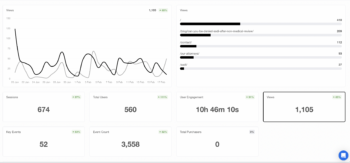
Website speed optimization strengthens every other marketing effort. It protects the investment you are already making in traffic. As you can see, a website with excellent Core Web Vitals typically also has higher numbers of website sessions, users, engagement, events, and more.
Designing for AI-Driven Search
As AI-generated answers become more common in search results, technical performance remains important.
Search systems still crawl, evaluate, and interpret your site. If your pages load slowly or contain bloated code, crawl efficiency can suffer. Clean structure and strong performance help both users and machines understand your content.
In other words, speed supports visibility at multiple levels.
Where Websites Commonly Go Wrong
Most speed issues are not caused by one major error. They come from small decisions that add up, including:
- Large uncompressed images
- Too many plugins
- Third-party scripts that are never audited
- Fonts and animations layered on top of each other
Individually, they may seem harmless. Together, they can create drag.
The highest-performing websites in 2026 share a simple trait: restraint. Every element has a purpose. If something does not improve clarity, usability, or conversion, it does not belong.
What Effective Website Speed Optimization Looks Like
Real optimization follows a process. First, performance is measured using real user data, not just test scores. Next, bottlenecks are identified across hosting, code, and media assets. Then improvements are prioritized based on impact. Finally, performance is monitored over time.
Speed is not a one-time fix. It is ongoing maintenance and refinement.
That mindset is what separates reactive troubleshooting from strategic website speed optimization.
Frequently Asked Questions
Are Core Web Vitals still important in 2026?
Yes. They remain part of Google’s page experience evaluation and continue to influence competitive search performance.
What is considered a good load time today?
Ideally, primary content should load within about 2.5 seconds on mobile. However, responsiveness and layout stability are just as important as raw speed.
Can improving speed increase conversions?
In many cases, yes. Faster sites reduce friction, improve engagement, and support stronger conversion rates.
Is website speed optimization only for large companies?
No. In fact, smaller businesses often see noticeable gains when performance improves because it directly impacts lead flow and ad efficiency.
The Bottom Line
In 2026, speed is part of credibility. If your website feels slow or unstable, visitors notice, search engines notice, and your marketing performance reflects it.
Website speed optimization is not a technical add-on. It is a core part of modern web design.
If you are planning a redesign or questioning whether your current site is holding you back, now is the time to evaluate performance seriously.
Let’s review your Core Web Vitals and build a faster, stronger foundation for your next stage of growth. Contact us today to book a complimentary call.